
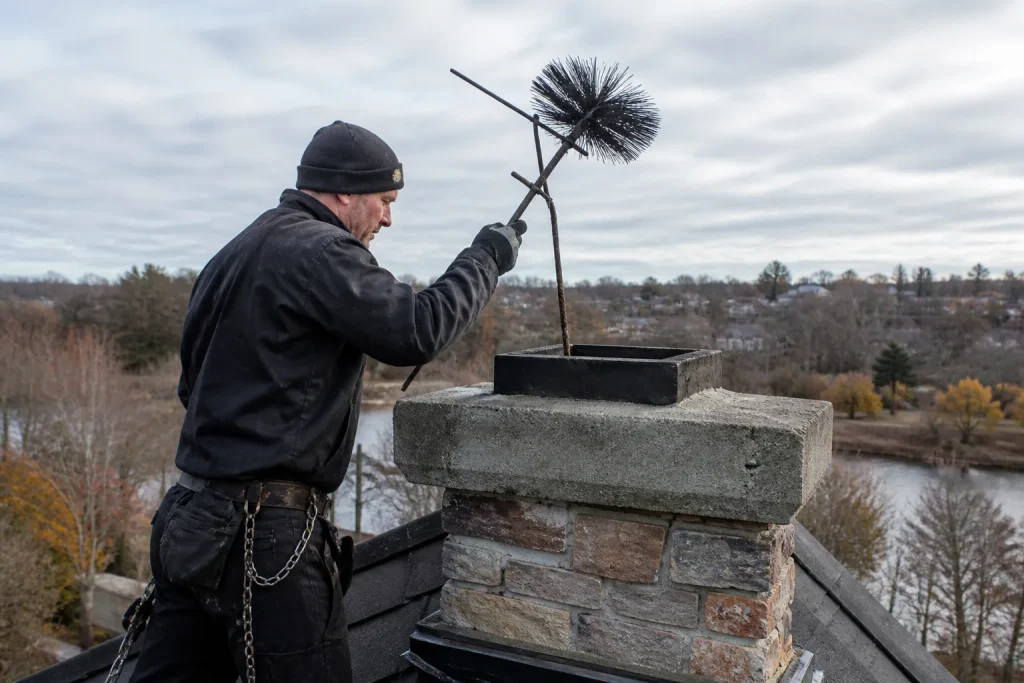
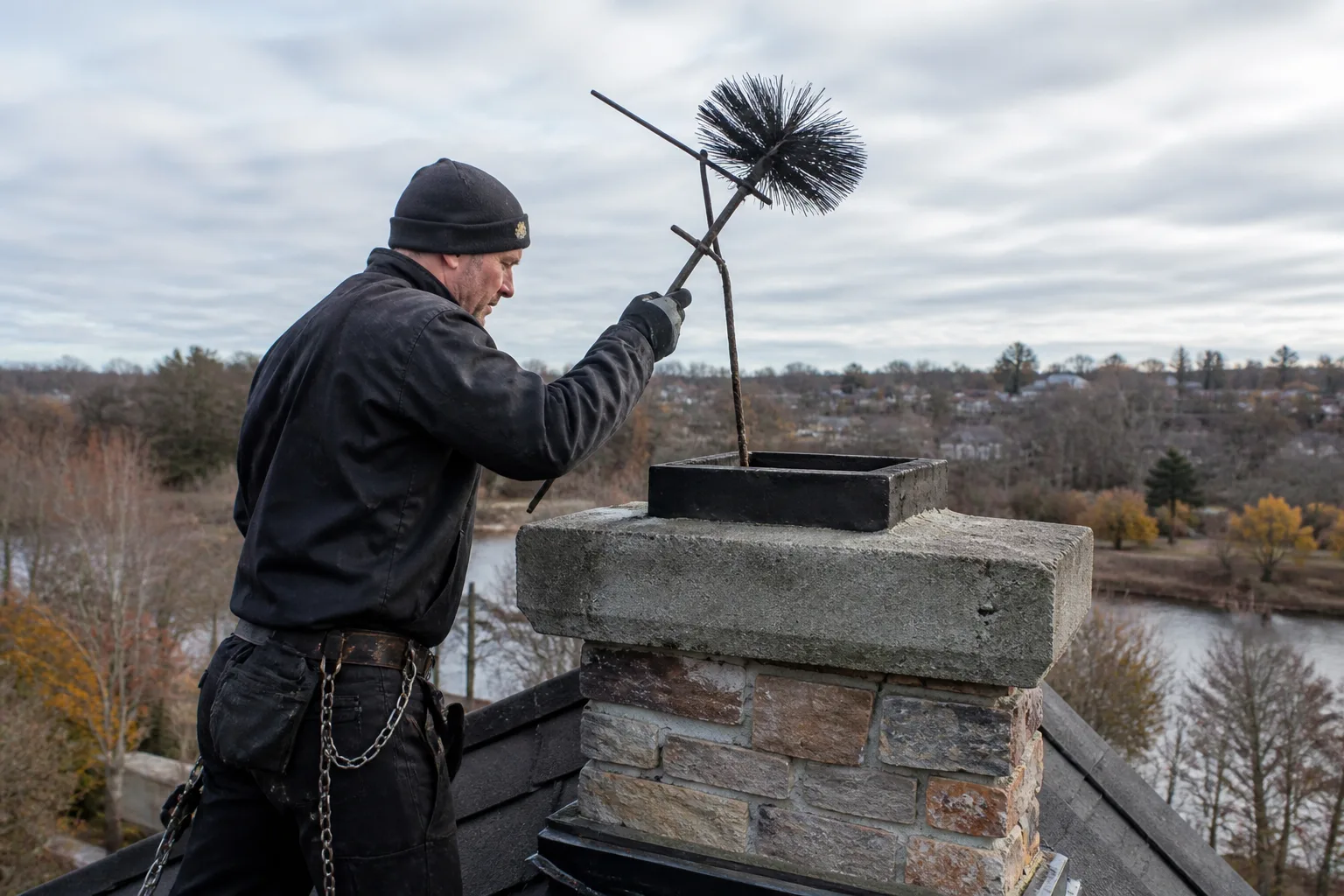
Top Signs You Need Chimney Cleaning Service – Don’t Ignore These
Most homeowners book a sweep because a year has passed, not because their chimney is telling them something. The signs that a chimney actually needs cleaning are physical, and they show up long before a fire ever gets risky. Below we walk through what to look for inside and outside the system, how to read creosote stage two before it becomes a problem, and when a standard sweep stops being enough. If you’d rather have trained eyes on it than guess, call (877) 792-5845.
What are the first signs a chimney needs cleaning?
The earliest reliable sign is a change in how the fireplace behaves, not a date on the calendar. A fire that used to catch quickly now struggles, smoke that used to rise cleanly now rolls into the room, and the smell of a cold fireplace gets stronger as the weather warms. Those are the physical signals a chimney gives you when its flue is loading up with creosote and soot.
Here’s what we tell homeowners to watch for:
- The fire is harder to light. A restricted draw makes kindling smolder instead of catch.
- Smoke spills forward instead of up. A few puffs at startup can be normal; steady rollback is not.
- A strong smoke smell when the fireplace is cold. More on this below, because it matters more than people think.
- Visible soot or a rough, sticky coating inside the firebox. That coating is creosote, and its texture tells you which stage you’re in.
- Debris dropping into the firebox. Bits of soot are expected; twigs, nesting material or grit are not.
When these signals stack up, a chimney sweep moves from maintenance to something closer to a diagnosis. That’s the point where a condition-based decision beats a calendar-based one.
The three creosote stages – and why stage two changes everything
Creosote builds in three recognizable stages, and each one calls for a different response. Stage one is a light, flaky soot that brushes away easily. Stage two is a shiny, hardened, tar-like deposit that clings to the flue walls and smells sharp when the chimney is warm. Stage three is a dense, glazed coating that a standard brush won’t touch. Stage two is the line where cleaning stops being routine and starts being genuinely necessary.
How to tell them apart on a visual check:
- Stage one: dark, powdery flakes. This is normal buildup and clears with a standard sweep.
- Stage two: the surface has a glossy or crusted look, and running a finger leaves a sticky smudge. This is the deposit that needs more than a light pass with a brush.
- Stage three: a hard, glassy glaze with almost no give to it. This is the layer that requires specialist removal by a trained technician, never a homeowner with a brush.
Our technicians have up to 11 years of experience reading these stages, and it’s a big part of why we treat a sweep as an inspection opportunity. We inspect before we recommend, and we repair with materials built to last. If the flue is at stage two or beyond, a quick brush alone won’t get you back to safe.
Why a smoky smell in summer is more urgent than one during burning season
A smoky smell coming from a cold fireplace in summer is a more urgent signal than the same smell while you’re actively burning. During burning season some odor is expected. In summer, the fireplace is empty, so an oily or sharp smoke smell means creosote is off-gassing from deposits already on the flue walls – plus whatever moisture and debris are trapped up top.
Often the culprit is a combination. Warm outside air pushing down a cool flue can let the house pull that stored smell back inside. Add a heavy creosote load and the effect gets worse. That’s why a summer smell is worth acting on before the next burning season, not after it.
When you notice it, the practical next step is a professional look rather than a scented candle. This is also where the rest of the system comes in: a damaged cap or a cracked crown lets moisture in, moisture feeds that smell, and the fix is structural. That’s the reason our chimney cap & crown work sits alongside cleaning rather than as a separate afterthought.
Restricted draw: negative pressure, blockage, or an undersized flue?
A restricted draw feels like a fireplace that refuses to cooperate – the fire fights you, smoke hesitates at the damper, and the room fills with a faint haze. The trick is figuring out which of three causes you’re dealing with: negative house pressure, a physical blockage, or a flue that’s simply too small for the firebox.
- Negative pressure tends to show up when exhaust fans, a tightly sealed house, or a competing flue pulls air down the chimney. The fire behaves worse on windy days or when the kitchen fan runs.
- Physical blockage – soot, a fallen liner section, a bird nest – shows up as a consistent problem, not a weather-dependent one.
- An undersized flue reveals itself over time: the fireplace has always been sluggish, not just lately.
Telling these apart is where a diagnosis beats a guess. Our chimney repair work is built on that diagnostic-first approach – we look, we test, we explain what we found. Professional-grade materials from brands chimney specialists trust – DuraFlex, Olympia Chimney, Copperfield and others – come into play only when the flue itself needs correcting, not as a default upsell. If the draw problem turns out to be simple and safe to wait on, we’ll say so.
Animal nesting signs most homeowners misread
Animal nesting shows up as debris type, smell, and sound – and homeowners routinely blame the wrong cause. A chimney makes an appealing home for birds and small mammals, and the evidence is usually specific once you know what to look for.
- Debris: twigs, grass, feathers, or shredded material landing in the firebox is nesting material, not ordinary soot.
- Smell: a musty or waste-like odor that doesn’t match creosote is a nesting indicator, especially in summer.
- Sound: scratching, fluttering, or chirping from the flue, most noticeable in the quiet of early morning.
The common misreads are treating a nest as a simple soot problem or assuming a draft issue is just a draft issue. Both lead people to the wrong fix. The right move is a proper look up the flue, which is why professional chimney inspection is a standalone service for us: it’s the diagnostic step that tells you what’s actually in there, nest or no nest. If you’re hearing scratching in Concourse, don’t light a fire until it’s checked.
Exterior signals: spalling brick, white staining, rusted caps
The outside of a chimney often reports a problem the inside hides. Spalling brick, white staining, and rusted cap components mean the chimney needs service even when the firebox looks fine. These are moisture and structural signals, and they’re easier to spot than most people realize.
- Spalling brick: the face of the brick flakes or crumbles. It points to water getting in and freezing, then breaking the brick apart.
- White staining: a chalky white powder on the brickwork signals moisture moving through the masonry and leaving salts behind.
- Rusted cap components: rust on the cap means water is reaching metal that should stay dry, which usually points to a failing crown or cap.
None of these are cosmetic. Each one lets more moisture in, and moisture is the slow engine behind nearly every major chimney repair. We carry Chimney Cap & Crown as its own service because addressing the top of the system protects everything below it. When you spot any of these exterior signs, a professional-grade cap and crown with a brand like Gelco or Famco is often the durable fix rather than another patch.
When to call a pro
Call a professional when the signs cross from cosmetic to structural: stage two creosote or beyond, a summer smoke smell that won’t clear, draw problems that don’t resolve on their own, any sign of nesting, or exterior damage like spalling brick and rusted caps. A standard brush sweep handles ordinary soot; the moment anything above that shows up, a trained technician needs to see it in person.
Our technicians have up to 11 years of experience inspecting, evaluating, and repairing chimneys, and we pair every sweep with a real look at the full system. You get a report and a fix you can trust, not just a clean flue and a bill.
Related services in Concourse: a chimney sweep, chimney cap & crown, chimney repair, fireplace repair, or a standalone chimney inspection – one company, one call for the whole system.
The Bottom Line
Your chimney tells you when it needs attention – through how the fire behaves, what the flue smells like, what the exterior looks like, and what’s landing in the firebox. Learning to read those signs turns chimney care from a calendar chore into a condition-based decision, and stage two creosote, summer smoke smells, draw problems, nesting, and exterior damage all point to the same answer: get it looked at.
At Chimney Sweep Concourse, we connect you with local professionals who inspect before they recommend and repair only when the condition calls for it, using professional-grade brands like DuraFlex and HeatShield throughout. If you’re in Concourse and need help, Chimney Sweep Concourse offers free estimates – call (877) 792-5845. We answer 24/7. Fast dispatch from 7am to 7pm, Sunday through Friday.
Frequently Asked Questions
The clearest single sign is creosote that has reached stage two – a shiny, sticky, tar-like coating on the flue walls rather than light powdery soot. If you see or smell that, it’s time for a professional look regardless of when you were last swept. Call (877) 792-5845 for a free estimate.
Hold off on burning until the smell is explained, especially if it’s accompanied by a hard-to-light fire or smoke rollback. A cold-fireplace smell in summer usually signals creosote buildup or moisture, and lighting a fire adds to the problem. A quick inspection sorts out the cause safely. Call (877) 792-5845 to book one.
Yes. In winter, some odor is expected while you burn; in summer, with the fireplace cold, an oily smoke smell means deposits are off-gassing from the flue or moisture and debris are trapped up top. It’s a more urgent signal and worth a professional look before the next burning season. Call (877) 792-5845 for an exact quote.
Start with a sweep, but if any sign beyond ordinary soot appears – nesting, draw problems, exterior damage, or stage two creosote – you need a proper inspection. We offer inspection as its own service precisely so it’s a real diagnostic step rather than an add-on. Call (877) 792-5845 to talk through what you’re seeing.
Written by the team at Chimney Sweep Concourse.
Need Chimney Cleaning Help?
Call Chimney Sweep Concourse - the local pro we connect you with is licensed and insured, here with fast help in Concourse.
(877) 792-5845